
West Smethwick Park is one of the oldest and most beautiful public parks in the Black Country, yet many visitors are unaware of the remarkable story behind its creation. Hidden among its tree-lined avenues, historic monuments and peaceful lake is the legacy of one man whose generosity transformed Smethwick forever.
In this episode of The Sandwell Walker, we explore the fascinating history of West Smethwick Park and discover how local industrialist James Timmins Chance helped create one of the finest Victorian parks in the Midlands.
The Birth of West Smethwick Park
During the late nineteenth century, Smethwick was rapidly expanding as industry flourished across the Black Country. Thousands of people lived and worked in increasingly crowded neighbourhoods, and there was a growing need for open green spaces where families could escape the smoke and noise of the factories.
Recognising this need, James Timmins Chance, a member of the famous Chance glass-making family, donated both land and funding to create a public park for the people of Smethwick.
West Smethwick Park officially opened in September 1895 and quickly became one of the area’s most treasured public spaces.
James Timmins Chance – The Man Behind the Park
James Chance believed that everyone should have access to fresh air, recreation and beautiful surroundings.
His generosity extended far beyond simply providing land. He funded many of the park’s original features and helped establish a lasting legacy that continues to benefit local residents more than a century later.
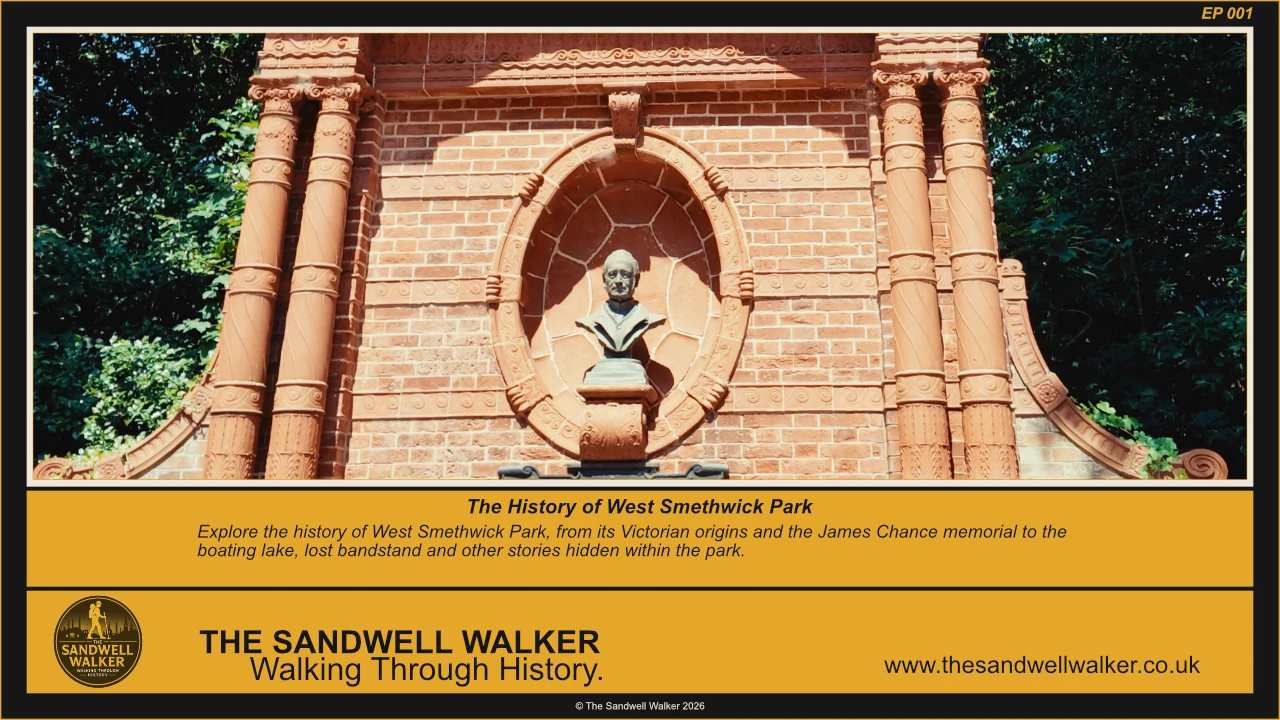
Today, visitors are welcomed by the impressive James Chance Memorial, which remains one of the park’s most recognisable landmarks and serves as a reminder of the man who made the park possible.
Lost Features of West Smethwick Park
Although the park remains one of Sandwell’s finest green spaces, several of its original Victorian attractions have disappeared over the years.
Among them were:
- A picturesque boating lake with rowing boats
- The original Victorian boathouse
- A traditional bandstand used for concerts and public events
- Refreshment facilities enjoyed by generations of visitors
While these structures no longer survive, they formed an important part of the park’s rich history and helped make West Smethwick Park one of the most popular destinations in the Black Country during the early twentieth century.
The Hidden County Boundary Stream
One of the most intriguing discoveries featured in this video is the forgotten stream that once flowed through the site.
Before the park was created, this small watercourse formed part of the historic boundary between Staffordshire and Worcestershire. During the construction of the park, the stream was incorporated into the design of the boating lake before much of its course was later culverted and hidden beneath modern development.
Although largely invisible today, this forgotten stream remains an important piece of Smethwick’s history and will be the subject of a future investigation on The Sandwell Walker.
A Wartime Tragedy
West Smethwick Park also witnessed tragedy during the Second World War.
In July 1944, an RAF training aircraft crashed within the park after its crew made every effort to avoid people below. Both airmen lost their lives, and today a memorial within the park honours their sacrifice.
This moving story reminds us that even peaceful places can hold extraordinary historical significance.
Discover West Smethwick Park Today
Today, West Smethwick Park remains one of the finest examples of a Victorian public park in the West Midlands.
Whether you’re interested in local history, architecture, photography, walking or simply enjoying nature, the park offers something for everyone while preserving the legacy of James Timmins Chance for future generations.
Watch the Full Video
Join The Sandwell Walker as we uncover the history of West Smethwick Park, explore its hidden stories and discover why James Chance truly became the man who changed Smethwick.