Rowley Regis is different from many traditional towns.
Rather than developing around one dominant commercial centre, the historic parish contained a collection of communities including Rowley Village, Blackheath, Cradley Heath, Old Hill and Tividale.
For centuries these settlements were surrounded by fields and the distinctive high ground of the Rowley Hills.
Then industry transformed the landscape.
Coal mining, quarrying, ironworking and manufacturing brought population growth and urban development. Roads, canals and railways connected previously rural communities with the expanding industrial Black Country.
Yet the hills themselves remained one of the area’s defining features.
An ancient parish
The history of Rowley Regis stretches back many centuries.
The settlement was recorded in medieval documents, and the name Rowley is generally associated with a woodland clearing or rough clearing. The later addition of Regis indicated a royal connection.
The historic parish was extensive and incorporated several settlements that later developed strong identities of their own.
At its centre was Rowley Village, situated high on the Rowley Hills.
For generations, the parish church formed an important focus for the surrounding community.
The elevated position meant that Rowley Regis looked out across countryside that would eventually become one of Britain’s most heavily industrialised regions.
The Rowley Hills
No physical feature is more closely associated with Rowley Regis than the Rowley Hills.
The hills rise prominently above the surrounding Black Country and are geologically distinctive.
Their underlying rock includes Rowley Rag, a hard igneous dolerite formed from ancient volcanic activity.
This rock would eventually become enormously important commercially.
Quarrying altered the hills on a huge scale, but before industrial extraction intensified they formed part of a predominantly rural landscape of farms, lanes and scattered settlements.
Rowley Rag
Rowley Rag became one of Rowley Regis’s best-known natural resources.
Its hardness and durability made it particularly useful for roadstone and other construction purposes.
Large quarries developed across the hills.
Stone was blasted and removed on an industrial scale, permanently altering the shape of parts of the landscape.
Quarrying provided employment for generations of local workers and supplied material far beyond Rowley Regis.
The industry also created some of the dramatic excavated landscapes still associated with the hills today.
Coal beneath the parish
Stone was not the only valuable resource.
Rowley Regis lay within the wider South Staffordshire Coalfield.
Coal mining became increasingly important as the Black Country industrialised.
Pits developed around the parish and provided fuel for factories, furnaces and domestic use.
As elsewhere in the Black Country, mining transformed both landscape and society.
Workers needed housing.
Businesses developed around industrial communities.
Roads and transport links improved.
Agricultural land increasingly disappeared beneath pits, spoil heaps, workshops and expanding streets.
Industry spreads
Different parts of the parish developed different industrial specialisms.
Cradley Heath became internationally associated with chain making.
Old Hill developed as an important commercial and industrial community.
Blackheath grew into a significant shopping and population centre.
Tividale developed alongside mining, quarrying and manufacturing.
Rowley Village retained a somewhat different character because of its elevated position, although industry surrounded it.
This helps explain why Rowley Regis still feels less like a single-centred town than some of Sandwell’s other historic towns.
Its identity developed across several distinct communities.
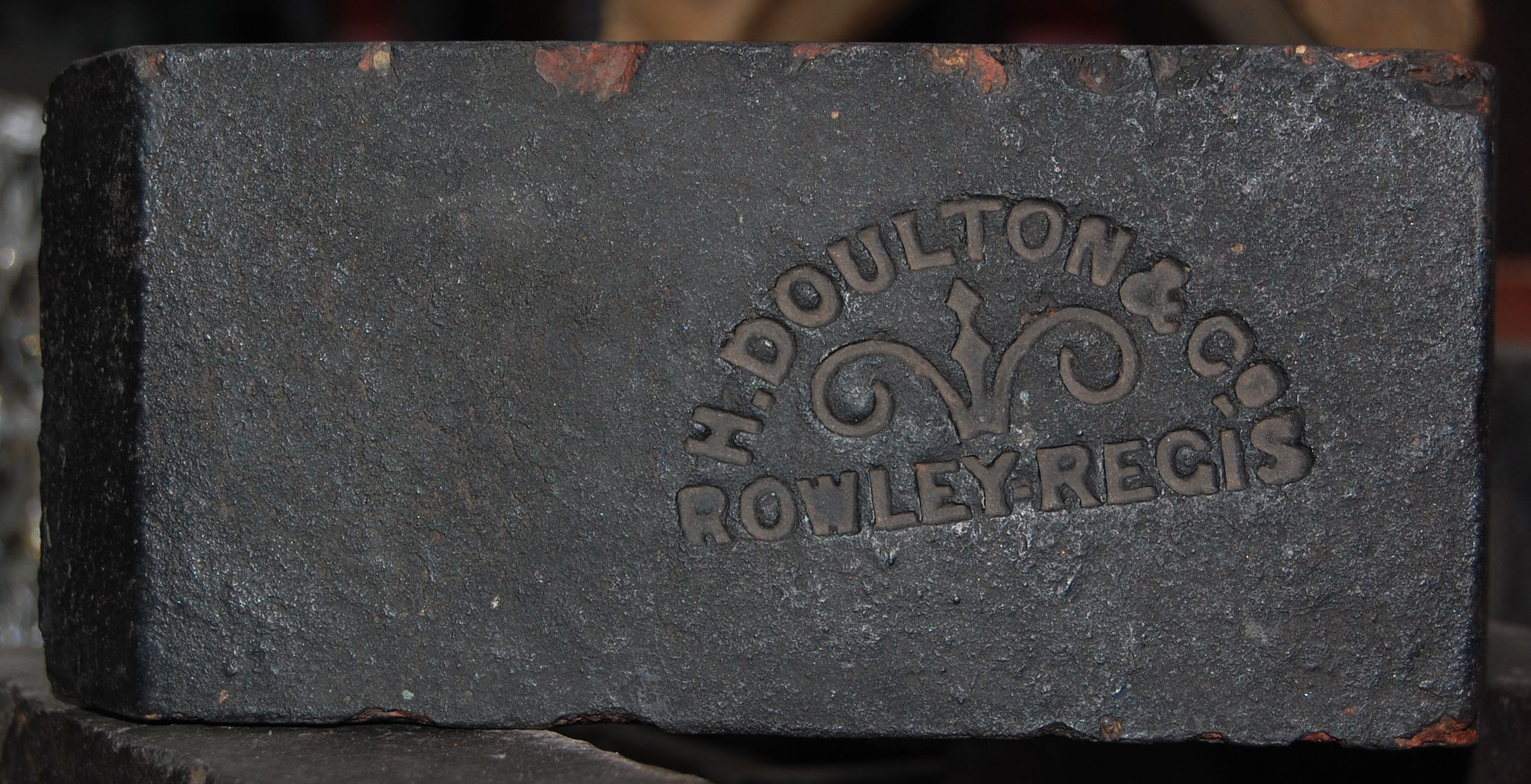
A brick marked H. Doulton, Rowley Regis, preserved in the Black Country Living Museum collection — a tangible reminder of the area's extractive and manufacturing heritage.
Image credit: Photograph: Andy Mabbett · Source: Black Country Living Museum collection / Wikimedia Commons · CC BY-SA 3.0 · Image date: 18 February 2012
Chain making and Cradley Heath
One of the most famous industries associated with the historic Rowley Regis district was chain making.
Around Cradley Heath, chains were often produced in small workshops attached to workers’ homes.
The work was physically demanding.
Hot iron was shaped and welded link by link.
Many women worked in the trade, frequently for very low wages.
Their working conditions eventually became nationally significant.
The campaign led by Mary Macarthur and the National Federation of Women Workers culminated in the famous 1910 women chainmakers’ strike, which successfully challenged employers who refused to pay newly established minimum rates.
The dispute remains one of the most important episodes in the labour history of the Black Country.
Roads, canals and railways
Industrial Rowley Regis depended upon transport.
Roads carried workers and goods between neighbouring communities.
Canals served heavy industries around the edges of the district and connected local works with the wider Birmingham Canal Navigations.
Railways later provided faster movement of passengers, coal, stone and manufactured goods.
Transport was especially important for quarrying.
Huge quantities of Rowley Rag had to be moved efficiently from the hills to customers elsewhere.
Improved transport therefore allowed local natural resources to become major commercial industries.
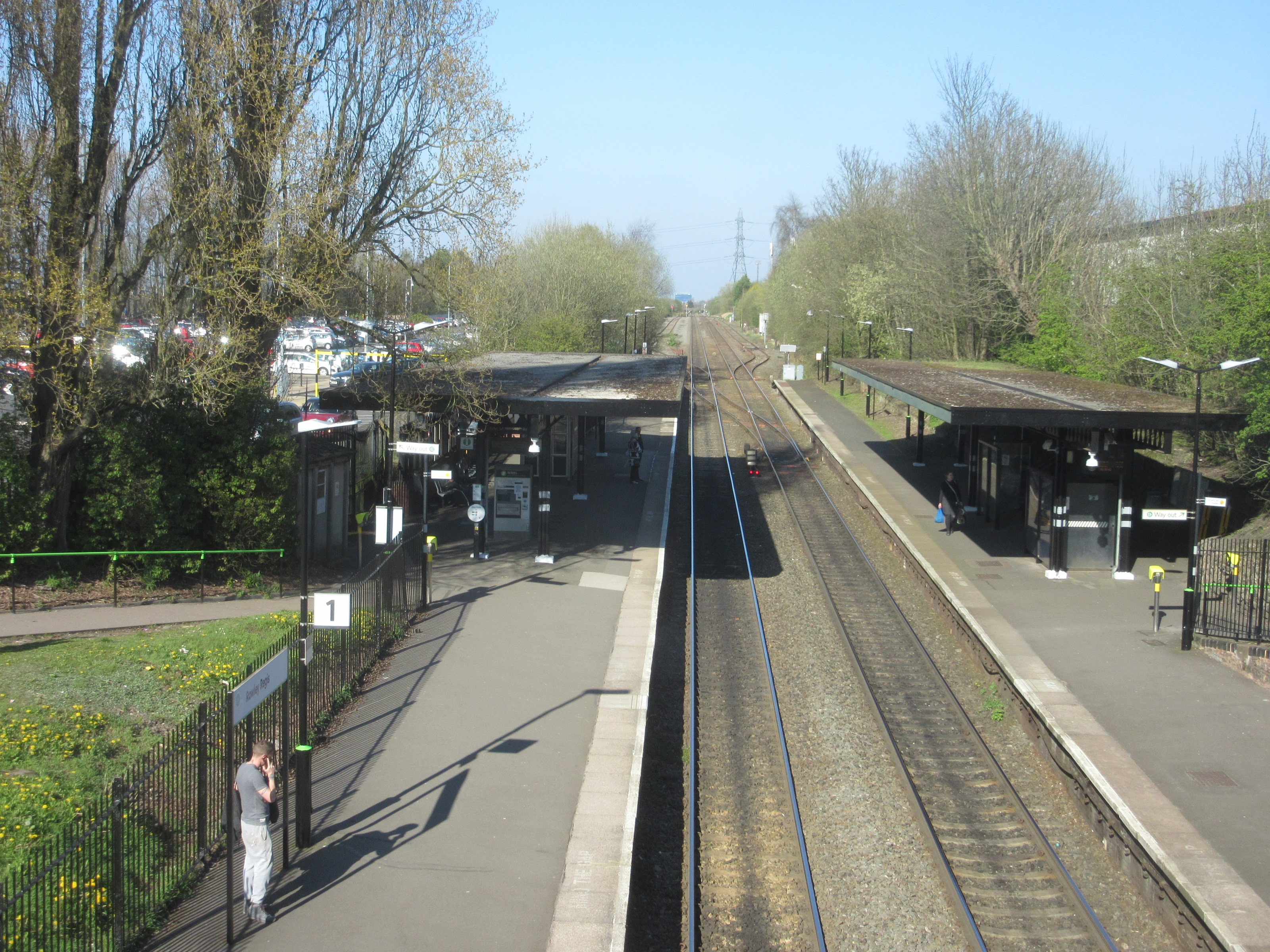
Rowley Regis railway station, part of the transport network that connected the area's communities with Birmingham and the wider Black Country.
Image credit: Photograph: Hassocks5489 · Source: Wikimedia Commons · CC0 1.0 · Image date: April 2017
Blackheath grows
As the population expanded, Blackheath developed into one of the principal commercial centres of the district.
Shops and businesses served surrounding communities.
Public transport brought shoppers into the centre.
Blackheath gradually assumed many of the functions people might normally associate with a traditional town centre.
This development reinforced the unusual geography of Rowley Regis.
The historic village remained on the hills, while much of the commercial activity developed elsewhere.
Victorian civic development
Industrial growth required increasingly organised local government.
Sanitation, roads, housing, public health and education all demanded greater attention.
Rowley Regis eventually developed its own municipal institutions and civic identity.
In 1894, Rowley Regis became an Urban District.
Further development followed, and in 1933 Rowley Regis became a Municipal Borough.
The borough included Blackheath, Cradley Heath, Old Hill and Rowley Village.
War and industry
The industries of Rowley Regis contributed to Britain’s wartime economy.
Engineering works, foundries and metalworking businesses adapted production to meet wartime needs.
Local families also experienced the direct consequences of conflict.
Men left to serve in the armed forces.
Women took on additional industrial roles.
Air raids affected the wider Black Country because of its concentration of strategically important manufacturing.
War memorials throughout the district preserve the names of residents who did not return.
Changing industries
The industrial landscape began changing dramatically during the twentieth century.
Coal mining declined.
Traditional metalworking contracted.
Some quarries closed while others became increasingly mechanised.
Factories disappeared or changed use.
The small domestic workshops associated with trades such as chain making became increasingly rare.
Employment shifted towards newer industries and services.
The landscape began another transformation.
Reclaiming industrial land
Mining and quarrying left significant environmental problems.
Old pits had to be made safe.
Spoil heaps required landscaping.
Industrial sites could be contaminated.
Former quarries presented enormous physical obstacles to redevelopment.
Across Rowley Regis, land was gradually reclaimed and reused.
Housing estates appeared on former industrial ground.
Roads altered old routes.
Open spaces developed where industry had previously dominated.
Yet the Rowley Hills ensured that the geological story remained unusually visible.
Local government changes
The Municipal Borough of Rowley Regis did not survive the local-government reorganisation of the 1960s.
In 1966, most of Rowley Regis became part of the newly created County Borough of Warley, alongside Smethwick and Oldbury.
Another reorganisation followed in 1974.
Warley and West Bromwich were combined to create the Metropolitan Borough of Sandwell.
Rowley Regis became recognised as one of Sandwell’s six principal towns.
However, the older neighbourhood identities remained extremely strong.
Many residents still identify particularly with Blackheath, Cradley Heath, Old Hill, Tividale or Rowley Village.
Rowley Regis today
Modern Rowley Regis retains an unusual relationship between landscape and community.
The Rowley Hills remain visible across large parts of the Black Country.
Blackheath continues as an important commercial centre.
Cradley Heath retains strong associations with chain making and labour history.
Old Hill remains a distinct community.
Rowley Village preserves the name and location of the older settlement.
And across the district, surviving industrial features reveal how mining, quarrying and manufacturing shaped everyday life.
The story of Rowley Regis is therefore not simply the history of one town centre.
It is the history of a collection of communities bound together by landscape, geology and industry.
The Rowley Hills provided stone.
The coalfield provided fuel.
Workers created industries ranging from quarrying to chain making.
Transport connected those industries with the wider Black Country.
And although much of that industrial landscape has disappeared, the communities it helped create remain.
That combination makes Rowley Regis one of the most distinctive of Sandwell’s six historic towns.