Sandwell is often associated with the factories, mines and heavy industries of the Black Country, but its built heritage tells a much longer and more varied story.
Across Smethwick, Oldbury, West Bromwich, Wednesbury, Tipton and Rowley Regis, surviving buildings and structures range from medieval sites and timber-framed houses to Victorian civic buildings, industrial monuments, bridges, schools and public houses.
Some are nationally protected listed buildings. Others have been recognised locally because of their importance to the character and history of their communities.
Together, they provide physical evidence of how the six towns developed.
More than 200 listed buildings and structures
Historic buildings can receive statutory protection when they are considered to possess special architectural or historic interest.
Sandwell Council records more than 200 listed buildings and structures within the borough.
Listing does not mean that a building can never change. Instead, its special architectural or historic interest becomes an important consideration when alterations are proposed.
Sandwell also maintains a Local List for buildings considered to have special local architectural or historic interest. These are non-designated heritage assets rather than nationally listed buildings, but their importance is recognised in the planning process.
This means Sandwell’s heritage extends considerably beyond its most famous landmarks.
A history older than industry
Some of Sandwell’s surviving buildings pre-date the Industrial Revolution by centuries.
One of the most important is Oak House in West Bromwich.
Historic England dates the timber-framed house to around 1600, with additions made during the middle and later seventeenth century. It describes Oak House as an exceptionally well-preserved example of an early seventeenth-century yeoman farmer’s house.
The building contains surviving historic interiors, including carved panelling and wall paintings.
Oak House became a museum in 1898, meaning that generations of local residents have been able to encounter a surviving domestic building from a period long before West Bromwich became a major industrial town.
It is now Grade I listed.
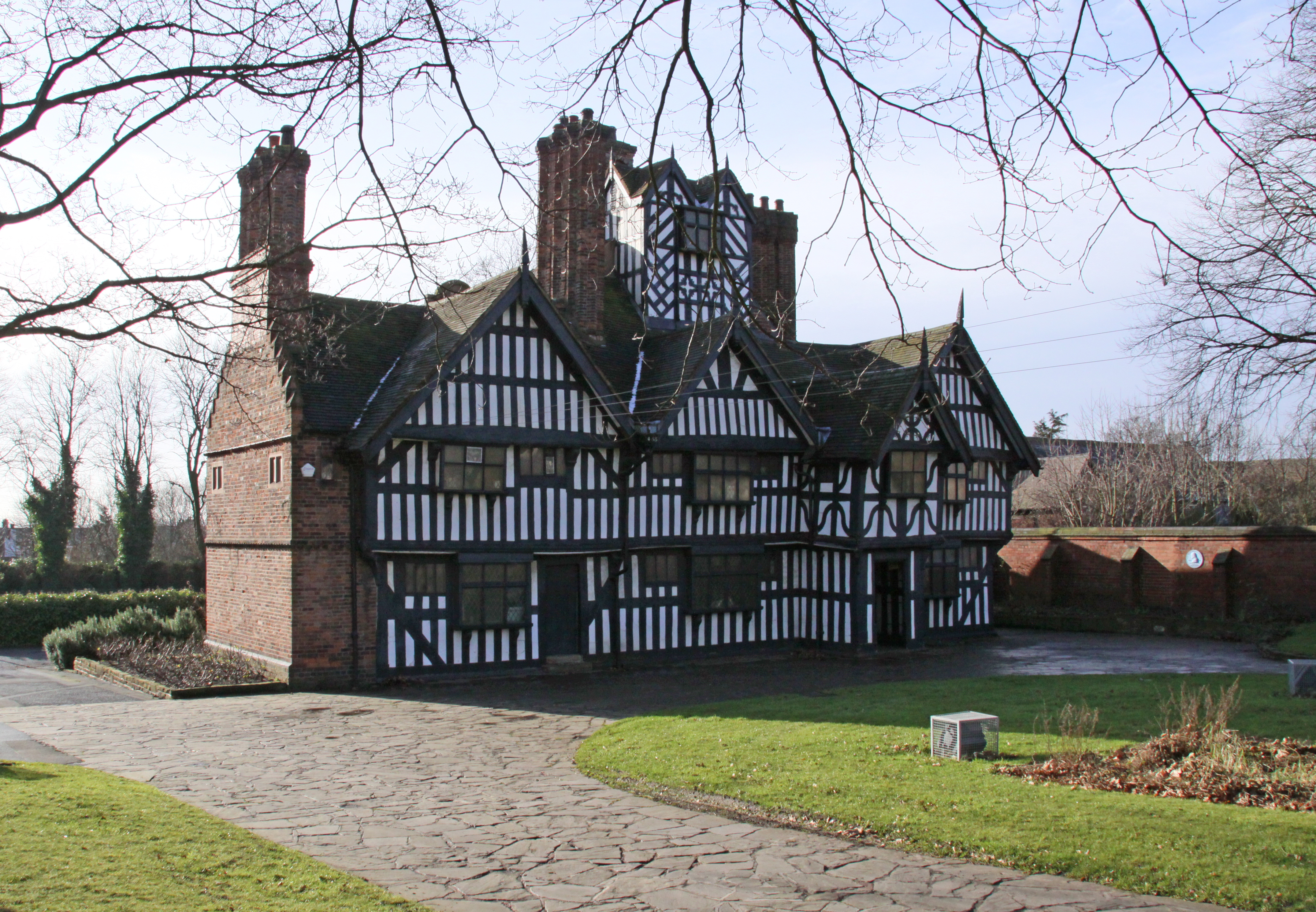
Oak House in West Bromwich, one of Sandwell's most important surviving pre-industrial buildings.
Image credit: Photograph: Tony Hisgett · Source: Wikimedia Commons · CC BY 2.0 · Image date: 21 January 2009
Bromwich Hall — a medieval survivor
Even older is Bromwich Hall, better known as the Manor House Museum in West Bromwich.
Sandwell Museums describes it as a medieval moated manor house built by Richard de Marnham during the 1270s.
Its survival is particularly remarkable when viewed against the enormous transformation of the surrounding Black Country landscape.
The Manor House reminds us that the settlements that eventually became industrial towns had much earlier histories of farms, estates, churches and small communities.
Modern Sandwell was not created on an empty landscape.
Industrialisation transformed places that were already centuries old.
Civic pride in West Bromwich
The nineteenth century created an entirely different type of landmark.
As industrial towns expanded, civic buildings were constructed to express confidence, prosperity and local identity.
West Bromwich Town Hall is an outstanding example.
Sandwell Council records that the Grade II listed building dates from 1875 and was designed in an Italian Gothic style.
Its architecture reflects the increasing status of West Bromwich during the Victorian period.
The Town Hall and neighbouring Central Library remain major landmarks, and recent restoration work has included repairs to their historic brickwork, stonework, timber detailing and architectural features.
These were not simply functional buildings.
They represented the ambitions of a growing industrial community.
Wednesbury Town Hall
Wednesbury developed its own prominent civic architecture.
Wednesbury Town Hall was built in 1874 in an Italianate style. Sandwell Council describes it as originally serving as the seat of the Wednesbury borough.
Its position within the town centre helped make it a visible expression of local government and civic identity.
Buildings such as this also demonstrate an important feature of Sandwell’s history: the six towns possessed strong individual identities long before they were brought together within the modern borough in 1974.
Their historic town halls are surviving reminders of that independence.
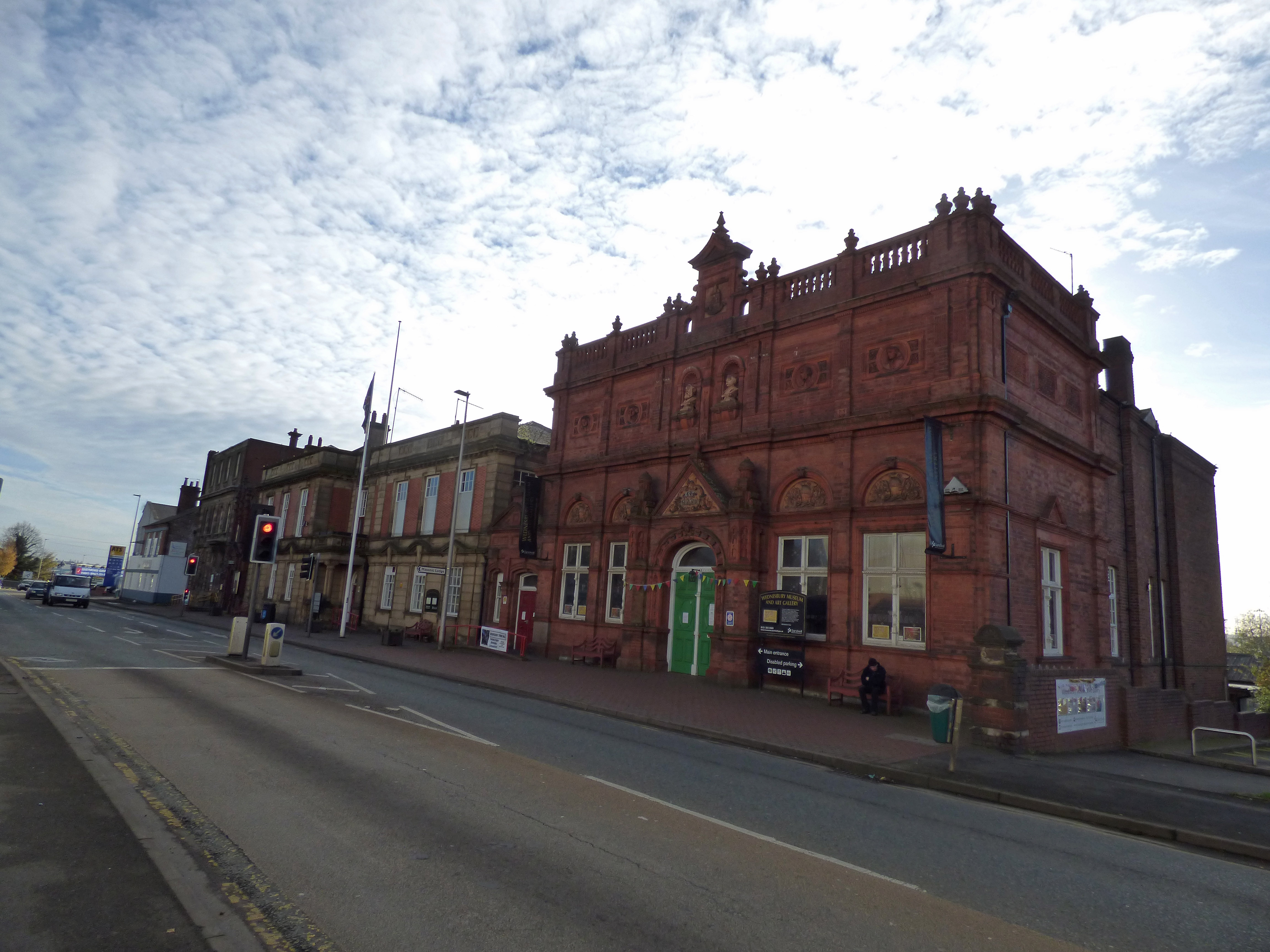
Wednesbury Museum and Art Gallery on Holyhead Road, an important survivor of Wednesbury's Victorian civic architecture.
Image credit: Photograph: Elliott Brown · Source: Wikimedia Commons · CC BY-SA 2.0 · Image date: 19 November 2017
Smethwick Council House
Smethwick’s own municipal growth produced another impressive civic landmark.
The Council House on Smethwick High Street was constructed between 1905 and 1907 to designs by architect Frederick J. Gill.
Historic England describes the Grade II listed building as a symmetrical Baroque composition built in yellow terracotta and red brick.
Its scale reflects Smethwick’s rapid development during a period when local industries were attracting workers and the population was expanding dramatically.
The Council House remains one of the most recognisable historic buildings on the High Street.
Buildings created by industrial prosperity
Industry changed more than factories.
The wealth, population growth and administrative demands created by industrialisation resulted in new schools, libraries, town halls, churches, public houses and commercial buildings.
Sandwell’s current heritage assessment notes that its Grade II listed buildings include historic public houses, Victorian schools, railway stations, bridges, workers’ housing, libraries and town halls.
This is important because industrial heritage is sometimes imagined only as factories and furnaces.
In reality, industrialisation reshaped almost every aspect of the built environment.
A Victorian school or public library can therefore tell us just as much about the growth of an industrial community as a surviving factory building.
Industrial structures become landmarks
Some of Sandwell’s most significant landmarks were built primarily for practical purposes.
Galton Bridge in Smethwick, for example, was constructed as part of the transformation of the Birmingham Canal system.
Today it is recognised as one of Sandwell’s nationally important heritage assets.
Canal bridges, locks, railway structures and other pieces of engineering survive throughout the borough.
They demonstrate how infrastructure itself can become historic architecture.
A structure originally designed simply to carry a road, railway or waterway may eventually become one of the most distinctive reminders of the industrial landscape that created it.
Historic areas as well as individual buildings
Heritage is not always confined to one building.
Sometimes the relationship between streets, buildings and open spaces gives an entire area its historical character.
Sandwell currently has nine conservation areas, including Church Square in Oldbury, Market Place in Wednesbury, Galton Valley and several areas of Smethwick, Factory Locks in Tipton, West Bromwich High Street and Windmill End at Warrens Hall in Rowley Regis.
These areas preserve something that an individual listed building cannot provide on its own: historical context.
A Victorian building surrounded by other surviving structures, street patterns and landscape features can tell a much richer story than the same building standing in isolation.
Buildings that have disappeared
Of course, not every important Sandwell landmark survived.
Industrial redevelopment, road construction, housing clearance and changing commercial needs resulted in the demolition of countless buildings during the twentieth century.
Factories disappeared.
Cinemas closed.
Public houses were demolished.
Schools were rebuilt.
Older housing gave way to estates, roads and shopping developments.
This makes the buildings that do survive particularly valuable.
They provide fixed reference points from which the lost landscape can be reconstructed using photographs, maps and personal memories.
Local landmarks matter too
Not every historically important building needs to be nationally famous.
A corner shop, school, pub, factory office or community building can hold enormous significance for the people who knew it.
This is one reason the Sandwell Local List is important.
Local listing allows buildings with particular architectural or historical value to their communities to be recognised even when they do not meet the criteria for national statutory listing.
For local history, these less celebrated buildings can sometimes produce the strongest memories.
They are the places people encountered during everyday life.
Protecting Sandwell’s historic environment
Historic buildings inevitably face challenges.
Maintenance can be expensive. Finding viable new uses for old buildings can be difficult, and surrounding redevelopment can alter their setting.
Protection therefore involves more than preventing demolition.
It requires understanding why a building matters and finding ways for it to remain useful without destroying the characteristics that make it historically significant.
Sandwell’s Historic Environment Record also provides a map-based record of known heritage assets across the borough, helping archaeological and historic information to be considered when development is proposed.
Landmarks as historical evidence
The greatest value of Sandwell’s surviving historic buildings is that they allow history to be encountered physically.
Maps and photographs can show us what once existed.
Documents can tell us who built something and why.
But a surviving building allows us to stand in front of something constructed generations ago.
Oak House provides a connection with life before industrialisation.
The Manor House reaches back into medieval Sandwell.
Victorian town halls record the confidence of rapidly expanding industrial communities.
Schools, libraries and workers’ housing reveal the everyday infrastructure required by those growing towns.
Industrial structures preserve the engineering that helped make the Black Country possible.
Together, these buildings and landmarks form an architectural record stretching across centuries.
A landscape worth preserving
Sandwell’s historic environment is not a collection of isolated old buildings.
It is the accumulated result of centuries of settlement, industry, transport, government and community life.
Some landmarks are nationally significant.
Others matter primarily to the street or neighbourhood in which they stand.
Both have a place in local history.
By recording, researching and preserving these structures — while also documenting those that have already disappeared — we can better understand how the six towns developed into the Sandwell we recognise today.
Sources & Further Reading
Sandwell Council — Historic Buildings and Structures
Sandwell Council — Historic Areas and Conservation Areas
Historic England — Oak House, West Bromwich
Sandwell Museums — Museums and Historic Sites
Historic England — Smethwick Council House