When we think about Wednesbury’s industrial past, it is easy to picture the familiar Black Country landscape of collieries, furnaces, factories and smoke.
But Wednesbury’s industrial history began much earlier.
Centuries before steam engines transformed manufacturing, people around Wednesbury were already extracting coal and ironstone, producing pottery and working metal.
The Industrial Revolution did not create industry in Wednesbury.
It expanded an industrial tradition that was already centuries old.
Beneath the medieval landscape
Medieval Wednesbury was surrounded by valuable natural resources.
Coal seams lay beneath the area alongside ironstone, while clay deposits provided material suitable for pottery manufacture.
Documentary evidence records coal pits and ironstone mining around Wednesbury by 1315. Sandwell’s archaeological research therefore places mineral extraction here several centuries before the large-scale industrialisation normally associated with the Black Country.
Early mining would have looked very different from the deep collieries of later centuries.
Where coal seams approached the surface, relatively shallow workings could exploit them using comparatively simple techniques.
Yet even at this early stage, the geology beneath Wednesbury was already influencing how people earned their living.
Wedgebury Ware
One of the most fascinating parts of Wednesbury’s early industrial history is pottery.
Archaeologists have identified a distinctive type of locally produced pottery known as Wedgebury Ware.
Production appears to have begun around the fourteenth century and continued for several centuries. Evidence of pottery manufacture has been discovered around the historic centre, including the Market Place and Lower High Street.
This is particularly significant because it demonstrates organised manufacturing taking place within medieval Wednesbury.
Local clay was transformed into useful domestic goods.
Kilns required fuel.
Craftspeople developed specialist skills.
Finished pottery could then be sold locally or transported along the roads passing through the settlement.
Wednesbury was already participating in a manufacturing economy.
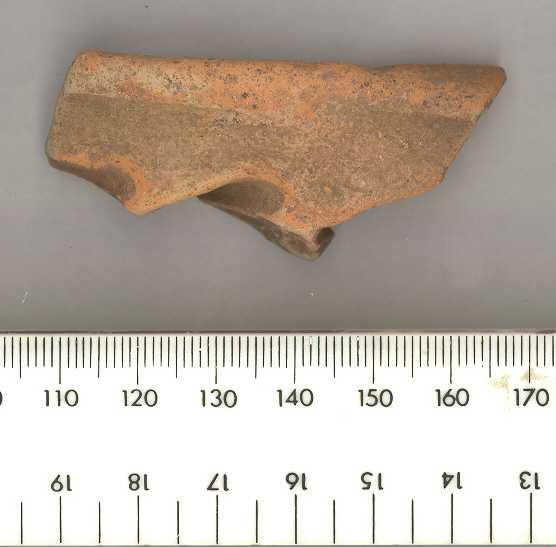
A wheel-thrown pottery fragment dating from the 15th or 16th century, identified as being closely related to the medieval pottery industry of Wednesbury.
Image credit: Photograph: Birmingham Museums Trust / Caroline Johnson · Source: Portable Antiquities Scheme / Wikimedia Commons · CC BY-SA 4.0 · Image date: 11 August 2004
Ironworking develops
Wednesbury’s association with iron also has deep roots.
Ironstone extracted locally could be processed and worked into useful products, and by the early modern period water power was being used to support increasingly sophisticated iron manufacture.
One particularly important site was Wednesbury Forge.
Sandwell’s conservation research records the conversion of manorial water mills to iron production during the sixteenth century. By the late sixteenth and early seventeenth centuries, Wednesbury Forge had developed into an important industrial operation.
Water power provided the energy needed to operate machinery.
This represents an important stage between small-scale craft production and the much larger factories that followed.
Industry was becoming increasingly organised and mechanised — long before steam became the dominant source of power.
Roads mattered too
Industry could not develop without transport.
Wednesbury occupied a useful position on established routes through the Black Country.
A crossing of the River Tame at Finchpath was documented by 1225, carrying the Birmingham–Wolverhampton road. Other routes connected Wednesbury with West Bromwich and Walsall.
These roads allowed raw materials and manufactured goods to move beyond the immediate settlement.
They also helped create the triangular Market Place where routes converged.
The relationship between transport, trade and manufacturing therefore existed in Wednesbury centuries before canals and railways arrived.
Coal becomes increasingly important
By the seventeenth and eighteenth centuries, demand for coal was growing.
Coal provided domestic fuel, but its importance to manufacturing was even greater.
Iron production required enormous quantities of fuel.
Brickmaking and pottery needed kilns.
Workshops and increasingly mechanised industries needed reliable sources of energy.
Wednesbury had that fuel beneath its feet.
Mining consequently expanded.
The landscape began changing as pits, spoil heaps and industrial workings appeared around the settlement.
This was the beginning of the environment that would eventually become synonymous with the Black Country.
The Industrial Revolution accelerates the process
During the eighteenth century, technological change transformed the scale of industry.
Steam power allowed mines to be drained more effectively.
Deeper coal seams could be exploited.
Iron production increased dramatically.
Improved machinery enabled factories to manufacture goods on a scale impossible for earlier workshops.
Wednesbury was particularly well positioned to benefit.
It already possessed minerals.
It already had ironworking traditions.
It already had manufacturing skills.
And it already sat within a network of established transport routes.
The Industrial Revolution therefore accelerated changes that had begun centuries earlier.
The canal age
The arrival of canals transformed industrial transport.
Heavy materials such as coal and iron could be moved far more economically by water than by horse-drawn road transport.
Wednesbury became connected to the expanding Birmingham Canal Navigations, integrating the town into one of Britain’s most intensive industrial transport networks.
Canal branches penetrated industrial areas and served mines, furnaces and factories.
Coal could leave a pit and travel by boat towards Birmingham or other Black Country works.
Raw materials could arrive by the same network.
The canals effectively turned individual industrial sites into parts of a much larger manufacturing system.
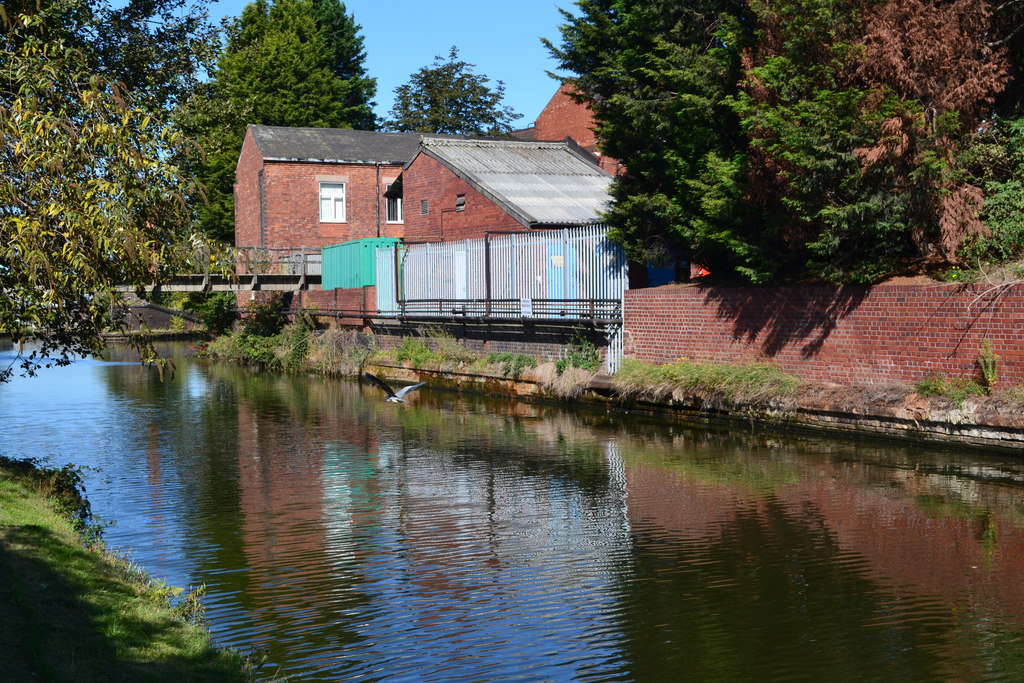
The Wednesbury Old Canal Main Line near Ryders Green Junction, part of the canal network that transformed the movement of heavy industrial goods through the Black Country.
Image credit: Photograph: David Martin · Source: Geograph Britain and Ireland / Wikimedia Commons · CC BY-SA 2.0 · Image date: 21 September 2019
An increasingly specialised town
By the nineteenth century, Wednesbury manufactured an extraordinary range of products.
Coal mining and ironworking remained important, but engineering and metal trades became increasingly specialised.
Factories produced items for markets far beyond the Black Country.
This industrial diversity helped protect the town from dependence upon a single employer or trade, but it also created an intensely industrial landscape.
Housing grew around factories.
Railways crossed older roads.
Canals passed behind workshops.
Chimneys and furnaces dominated views that had once looked across open countryside.
Wednesbury had become recognisably Black Country.
The human cost
Industrial development created employment and prosperity, but conditions could be extremely harsh.
Mining was dangerous.
Factories exposed workers to heat, dust, fumes and machinery.
Rapid population growth created overcrowded housing and sanitation problems.
Industrial pollution affected air, land and water.
The same geological resources that created Wednesbury’s economy therefore also shaped the living conditions of generations of residents.
Improvement came gradually through public-health measures, municipal services and changing working practices.
From ancient industry to modern manufacturing
Traditional heavy industry declined dramatically during the twentieth century.
Collieries closed.
Some factories disappeared.
Former industrial land was reclaimed for housing, roads, shops and other uses.
Yet Wednesbury never entirely lost its manufacturing identity.
Industrial estates and engineering businesses continue a tradition stretching back far beyond the Victorian period.
Modern machinery and manufacturing techniques would be almost unimaginable to a medieval miner or potter.
But the basic relationship remains familiar:
materials, skills, transport and people producing goods for markets beyond Wednesbury.
Seven centuries of industry
Wednesbury’s industrial story challenges the idea that Black Country industry suddenly appeared during the eighteenth century.
The evidence tells a much longer story.
Coal and ironstone were being exploited by 1315.
Medieval craftspeople produced Wedgebury Ware.
Water-powered mills became ironworks.
Wednesbury Forge developed before the age of steam.
Roads carried goods between neighbouring settlements.
Then canals, steam engines, deeper mines, furnaces, factories and railways dramatically increased the scale of everything that had come before.
The Industrial Revolution undoubtedly transformed Wednesbury.
But it did not invent industrial Wednesbury.
It built upon foundations that local workers had already been laying for hundreds of years.