Sandwell’s history survives in more than its old buildings.
It can be found in photographs of streets that have disappeared, maps showing forgotten industrial landscapes, newspapers reporting events as they happened, council records documenting changing towns and the memories of people who experienced those changes themselves.
For anyone researching the history of Smethwick, Oldbury, West Bromwich, Wednesbury, Tipton or Rowley Regis, these sources can reveal details that are no longer visible in the modern landscape.
Together they form an extraordinary record of Sandwell’s past.
Sandwell Archives
At the heart of this surviving documentary record is Sandwell Community History and Archives Service, usually known simply as Sandwell Archives.
Based at Smethwick Library, the service collects and preserves original archives and published material relating to the history of Sandwell. Its collections cover subjects ranging from local government and industry to schools, churches, families, photographs and maps.
Only a proportion of the archive holdings are currently catalogued online, meaning that an online search does not necessarily reveal everything that survives.
For local-history research, that makes the physical archive particularly important.
Thousands of historic photographs
Photographs are among the most immediately recognisable historical sources.
Sandwell Archives holds thousands of local photographs dating back to the mid-nineteenth century. Subjects include streets and buildings, industries, schools, festivals and events, local dignitaries and family photographs.
These pictures can do far more than illustrate a story.
A photograph may reveal the appearance of a demolished pub, the original frontage of a shop, tram tracks running along a familiar road or factories occupying land that has since become housing.
Small details can become valuable evidence.
Street signs, advertisements, vehicles, clothing, chimneys and even changes in road surfaces can help establish when and where an image was taken.
For places that have been almost completely redeveloped, photographs may provide one of the clearest surviving records of what was once there.
Maps reveal a lost landscape
Historic maps allow us to go further.
Sandwell Archives’ Ordnance Survey collection begins with the first editions of the 1880s and continues through later National Grid mapping.
The collection also contains material predating the Ordnance Survey.
The archive’s earliest original map dates from 1774, while other holdings include tithe and parish maps, nineteenth-century public-health maps, estate maps and enclosure maps.
For an industrial area such as Sandwell, another particularly valuable resource is the collection of mining and colliery plans showing underground workings. Building plans and plans relating to public buildings, pubs, drainage and sewage also survive.
Comparing maps from different periods can reveal extraordinary changes.
Fields become factories. Country lanes become urban streets. Collieries appear and disappear. Streams are diverted or placed into culverts. Housing estates replace industrial works.
Sometimes even the street pattern itself vanishes.
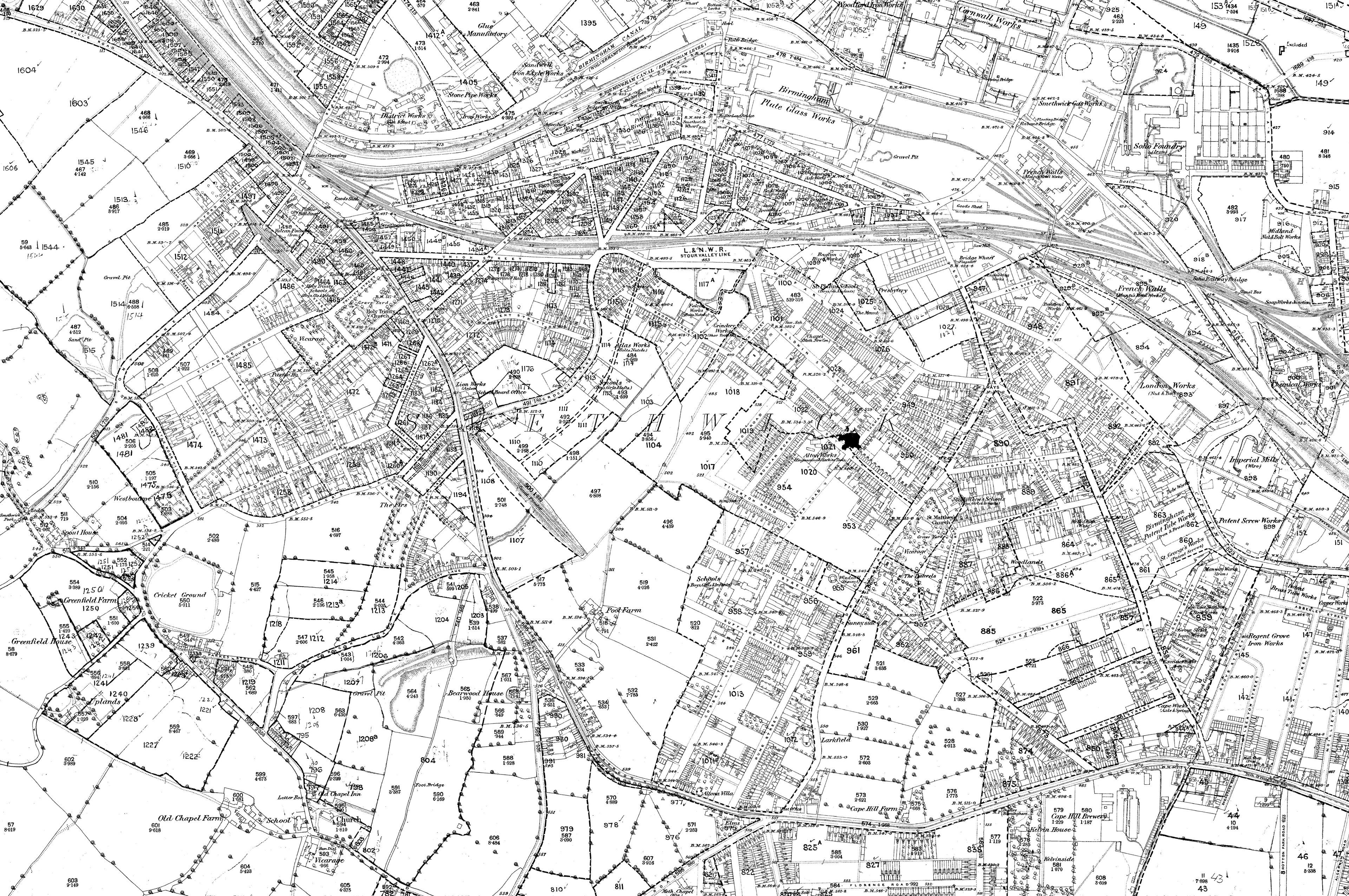
Ordnance Survey mapping of Smethwick dating from between 1884 and 1891.
Image credit: Photograph: Ordnance Survey · Source: Wikimedia Commons · Public Domain · Image date: 1884–1891
Newspapers record everyday history
Local newspapers provide another type of evidence.
Sandwell Archives holds newspapers dating overall from 1857 to the present, although not every title survives as a complete run.
Among the titles represented are the Oldbury Weekly News, Smethwick Telephone, Tipton Herald, Wednesbury Herald, West Bromwich Chronicle and the Express & Star.
Newspapers can record events that left little other evidence.
Factory accidents, council disputes, new buildings, pub licences, sporting events, celebrations, crime, transport changes and the everyday activities of local organisations all appeared in their pages.
Advertisements can be equally valuable.
They can establish when businesses were operating, where shops were situated and even what products local residents could buy at a particular point in time.
The records of the six towns
Before Sandwell Metropolitan Borough was created in 1974, its constituent towns had their own systems of local government.
Many of their records survive.
Sandwell Archives holds extensive records from the former councils, including minutes, rate books, electoral registers, planning and highways records, education material and public-health records.
The collections include records from local authorities serving all six present-day Sandwell towns.
For Smethwick, for example, records survive from its Urban District Council, Municipal Borough, County Borough and later Warley County Borough periods. Tipton’s records span its Urban District, Municipal Borough and later inclusion within West Bromwich County Borough. Similar administrative histories survive for Oldbury, Rowley Regis, Wednesbury and West Bromwich.
These documents allow researchers to investigate not merely what changed, but sometimes why it changed.
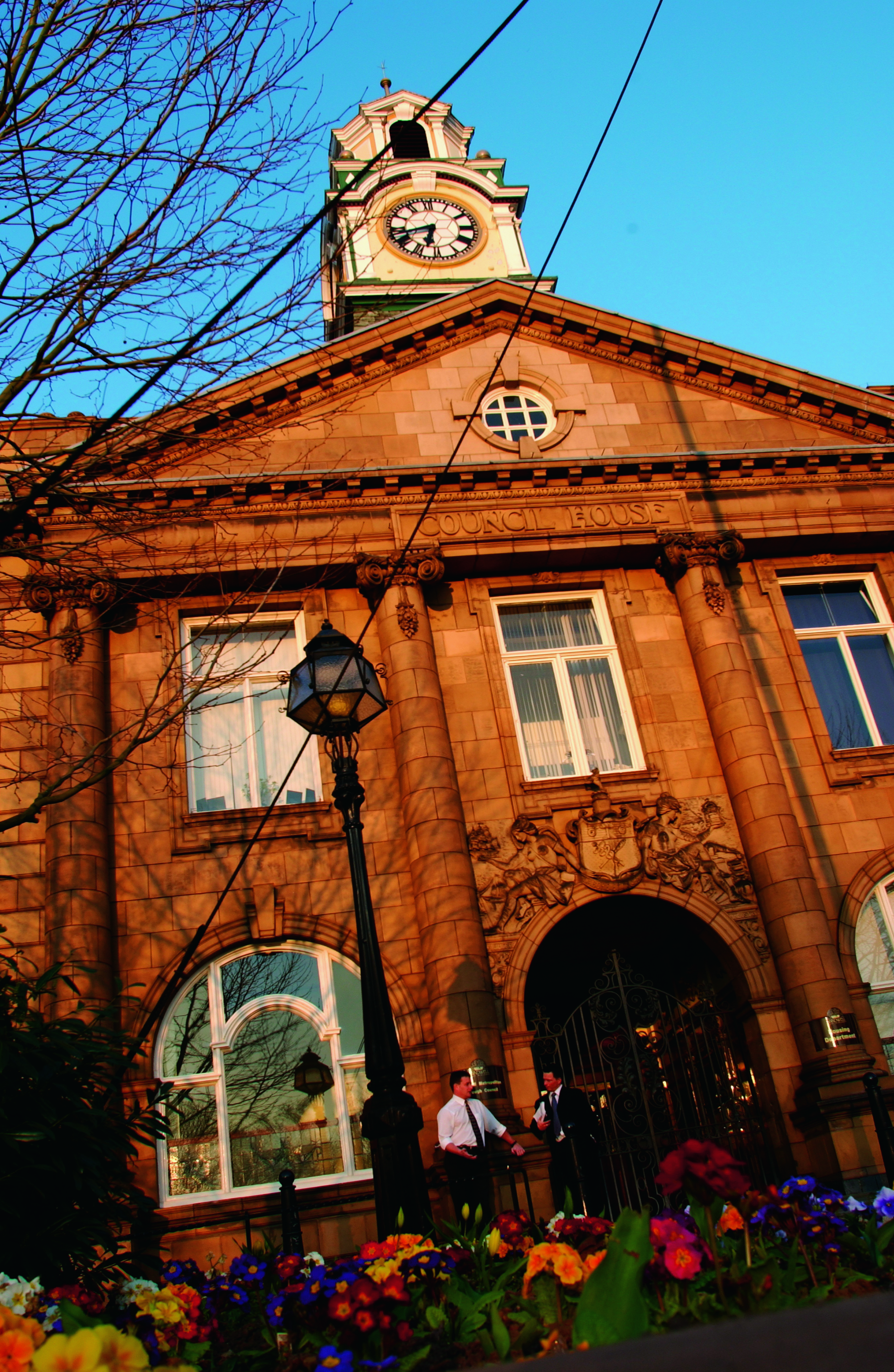
Smethwick Council House, representing the municipal history and surviving local-government records of the town.
Image credit: Photograph: Sandwell Council · Source: Wikimedia Commons · CC BY-SA 2.0 · Image date: 28 March 2002
Industry preserved on paper
Sandwell’s industrial history has generated enormous quantities of documentary evidence.
One of the most important examples is the surviving archive of Chance Brothers of Smethwick.
Sandwell Archives describes the company’s archive as extensive, with records relating to employees as well as the firm’s famous lighthouse work among the material that has been catalogued.
A recent cataloguing project reported that the collection contains approximately 180 boxes, with more than 50 boxes catalogued and over 1,600 additional items made accessible through that work.
Documents can preserve aspects of industrial life that factory buildings alone cannot.
They can tell us who worked there, what was produced, how businesses operated and how employers interacted with their workforce and surrounding communities.
Schools and childhood
School records provide a particularly personal connection with local history.
Sandwell Archives holds material from numerous schools and colleges, including pupil admission registers and headteachers’ log books. Records from the school boards of all six Sandwell towns also survive.
Headteachers’ log books can contain descriptions of daily events at a school.
Taken together with class photographs and personal memories, these records can help reconstruct an aspect of everyday life experienced by generations of local residents.
Access to more recent school records is restricted where they contain personal information, but older records remain an important resource for both family and local historians.
Personal papers and family history
Official documents only tell part of the story.
Personal collections can reveal Sandwell from an entirely different perspective.
The archives contain diaries, letters, legal documents, photograph albums and apprenticeship indentures, including records associated both with prominent families and ordinary people who lived and worked locally.
Family-history collections provide further ways of tracing individual lives.
Census returns, electoral registers, church registers and burial records can help establish where people lived, how families moved and how neighbourhoods changed.
When combined with maps and photographs, a name in an old document can sometimes be connected with a particular house, street, workplace or school.
Local memories as historical evidence
Not every part of Sandwell’s history was written down.
Personal recollections can preserve information that never appeared in official documents.
Residents may remember the names used locally for particular places, businesses that occupied individual shops, unofficial footpaths, playgrounds, demolished buildings or how an industrial site actually operated.
These memories are particularly valuable when researching the relatively recent past.
But memory also needs to be treated carefully.
People can remember dates incorrectly or different people may recall the same event differently. For that reason, oral history becomes especially powerful when it can be compared with photographs, maps, directories, newspapers and documentary records.
A recollection may provide the clue.
The archive can sometimes provide the confirmation.
Reconstructing places that disappeared
The greatest value often comes from combining several different sources.
Imagine researching a demolished street.
An Ordnance Survey map might establish the position of the buildings.
A photograph might reveal what they looked like.
An electoral register could identify some of the residents.
A newspaper might record businesses operating there.
Council records could document redevelopment.
And former residents might remember what living there was actually like.
No single source necessarily tells the complete story.
Together, they can reconstruct a place that has otherwise vanished from the landscape.
The importance of preserving local history
Local history can disappear surprisingly quickly.
Buildings are demolished. Businesses close. Street names change. Photographs are discarded and memories disappear when they are not recorded.
Archives therefore preserve more than old paperwork.
They preserve evidence.
For Sandwell, that evidence documents the enormous transformation of six historic Black Country towns through industrialisation, urban expansion, war, redevelopment and social change.
It also allows future generations to investigate those changes for themselves rather than relying solely upon stories repeated over time.
Building Sandwell’s history from evidence
This principle is central to historical research.
A historic photograph is not merely decoration.
A map is not merely an old drawing.
A newspaper report is not automatically the final word on an event.
Each is a piece of evidence that can be compared with other sources.
By bringing together archive records, historic photographs, maps, newspapers and local memories, it becomes possible to recover surprisingly detailed stories about places that may have disappeared decades ago.
And as more material is identified, digitised and shared, the history of Sandwell’s six towns continues to be rediscovered.
Sources & Further Reading
Sandwell Archives — Our Collections
Sandwell Archives — Photographs
Sandwell Archives — Maps and Plans