Oldbury’s modern appearance gives few clues to just how dramatically the town has changed over the last three centuries.
Before the Industrial Revolution, Oldbury was a relatively small settlement surrounded by countryside. Smallholders and nail makers were among its inhabitants, while roads connected the settlement with neighbouring communities and the growing town of Birmingham. The road through Oldbury towards Dudley was turnpiked around 1760.
What happened next transformed Oldbury almost beyond recognition.
The canals arrive
One of the decisive moments came in 1772, when the first canal was cut through Oldbury. Its arrival provided industry with an efficient means of moving heavy raw materials and manufactured goods between the Black Country and Birmingham.
Further improvements to the canal network followed. Thomas Telford’s works during the 1820s helped create an extraordinary landscape in which Oldbury was effectively surrounded by waterways — described in Sandwell’s conservation research as a “canal island.”
The canals provided access to Oldbury’s valuable mineral resources and encouraged manufacturers to establish works close to the waterways.
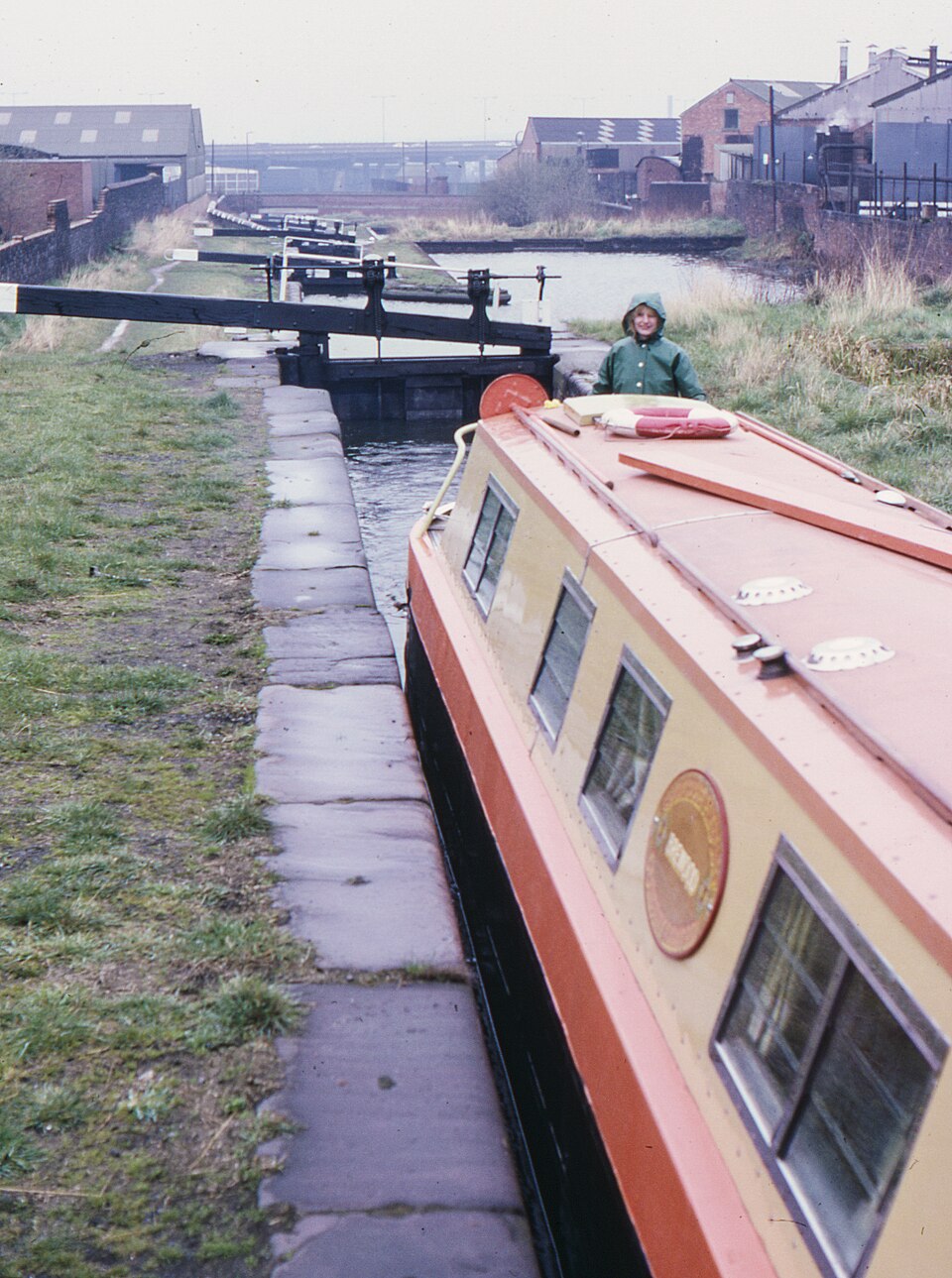
A narrowboat passing through Oldbury Locks on the Titford Canal in April 1978.
Image credit: Photograph: Guy Butler-Madden · Source: Geograph Britain and Ireland / Wikimedia Commons · CC BY-SA 2.0 · Image date: April 1978
Coal, iron and a growing town
Coal mining and iron working became dominant industries during the first half of the nineteenth century.
Collieries, furnaces, forges and foundries appeared around Oldbury and Langley. Four blast furnaces operated in the district between roughly the 1780s and 1860s.
People arrived in search of employment and the population expanded rapidly.
But industrial prosperity came at a considerable cost. Housing was constructed quickly for the growing workforce, while sanitation and water supplies struggled to keep pace. Meanwhile, spoil heaps, quarries, pits and industrial pollution increasingly replaced the countryside that had surrounded the earlier settlement.
A town of many industries
Oldbury did not depend upon a single trade.
Chemical manufacturing became particularly important. In the 1830s, chemical production was established locally to supply the nearby Chance Brothers glassworks in Smethwick. Phosphorus production followed, together with tar distillation and eventually plastics manufacture.
Brickmaking also became important as mining declined, exploiting the deposits of Etruria marl beneath the area.
Other Oldbury industries included iron foundries, edge-tool manufacture, railway engineering, boilers, tubes, maltings and brewing.
The arrival of the railways added another layer to this industrial landscape. The Oldbury Railway Carriage and Wagon Works, established in 1854, became one of the area’s major employers.
Building Victorian Oldbury
As the population increased, Oldbury developed the institutions expected of a substantial Victorian town.
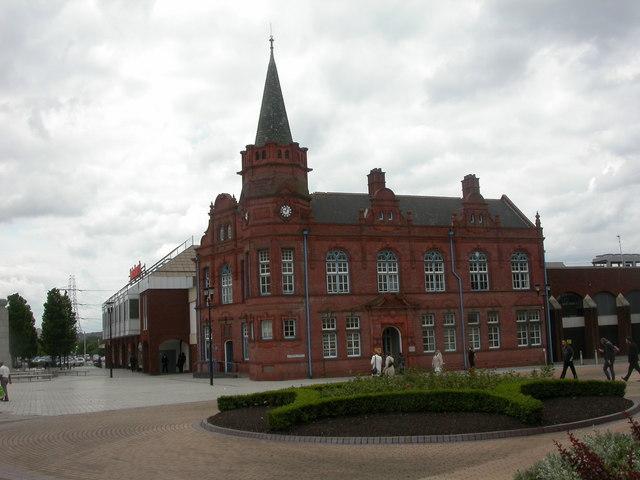
New roads spread out from the old Market Square and were lined with shops, churches, public buildings and houses. Christ Church was consecrated in 1841, while schools and Nonconformist chapels served the expanding population.
Local administration gradually became more organised as the problems created by rapid urbanisation had to be addressed.
A Board of Health was established in 1857, followed eventually by Oldbury Urban District Council in 1894. Public services including sanitation, water and gas improved as municipal government developed.